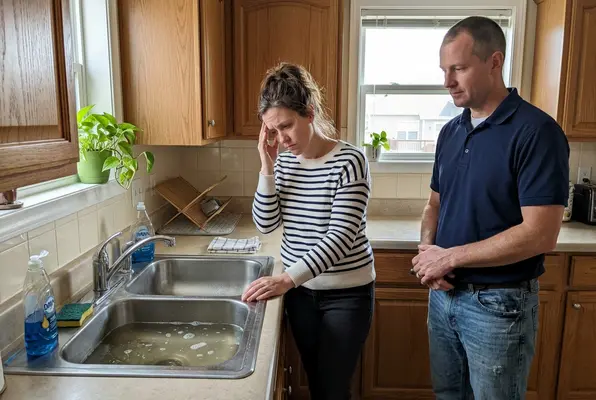
Slow or Clogged Drain in Spring Hill? When Professional Cleaning Makes Sense
Drain cleaning in Spring Hill typically requires professional attention when a clog persists after plunging, affects multiple fixtures, or causes slow drainage throughout your home. Beemer Plumbing, LLC has cleared thousands of drains across Spring Hill over 36 years, and we've found that most homeowners wait too long before calling—turning a simple fixture clog into a main line backup that costs significantly more to fix.
If you're dealing with standing water, gurgling sounds, or sewage odors, the problem's likely worse than a surface clog. Most main drain issues require specialized equipment and diagnostic work that go beyond what a plunger or store-bought chemical can handle.
Is the Clog in One Fixture or the Main Drain?
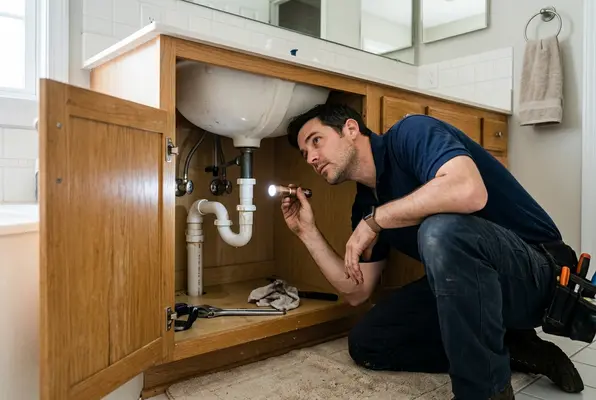
A clog in one fixture usually drains slowly or doesn't drain at all, while other sinks, tubs, and toilets work normally. A main drain clog affects multiple fixtures—often on the same floor or throughout the house—and may cause water to back up in lower-level drains when you use upper fixtures.
Watch for these main drain warning signs: multiple drains backing up at once, water pooling around your floor drain, toilets gurgling when you run the sink, or sewage smells coming from drains. Single-fixture clogs are often hair, soap buildup, or food debris trapped in the P-trap or branch line. Main drain clogs usually involve tree roots, grease accumulation, or collapsed pipe sections in the sewer line.
If plunging one fixture causes another drain to overflow, that's a main line problem. We use camera inspection equipment to pinpoint the exact location and cause before starting any clearing work.
When Professional Drain Cleaning Makes Sense and What It May Cost
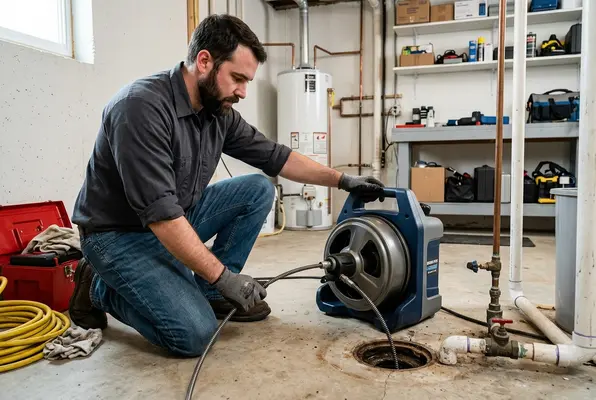
Call a plumber when plunging doesn't work after two attempts, the clog returns within days, multiple drains are slow, or you see water backing up elsewhere. DIY methods can't reach clogs more than a few feet down, and chemical cleaners often create bigger problems than they solve.
Professional drain cleaning cost depends on the clog's location, severity, and whether diagnostic work is needed. A simple fixture clog cleared with a cable auger typically costs less than a main sewer line requiring hydro jetting or camera inspection. Tree root intrusion, grease buildup deeper in the line, or the need for pipe repair after clearing all increase the final price.
Beemer Plumbing evaluates every job individually because no two clogs are identical. We've seen $150 sink clogs and $800 main line cleanouts in the same week—the difference is always how far down the blockage sits and what caused it. Recurring clogs almost always need camera inspection to find underlying pipe damage, bellied sections, or root intrusion points that cleaning alone won't fix.
Why the Clearing Method Depends on the Pipe and Cause
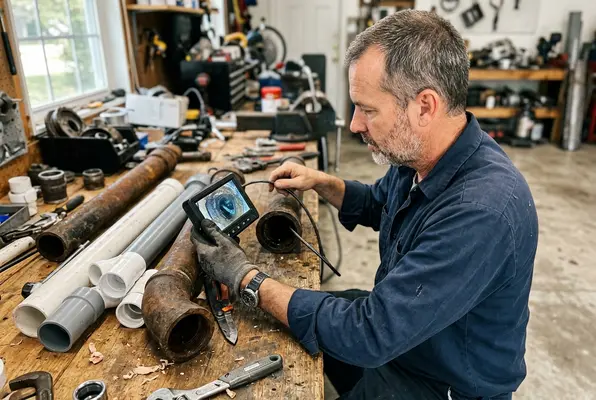
We choose between cable augers, hydro jetting, or manual removal based on what's clogging the pipe and what the pipe's made of. Older cast iron and clay pipes can't handle aggressive jetting that newer PVC tolerates, and using the wrong tool on fragile pipe causes leaks or breaks.
Cable augers work well for hair, soap, and soft organic buildup in fixture drains and branch lines. Hydro jetting clears grease, mineral scale, and tree roots in main sewer lines without damaging modern pipe. For collapsed or severely deteriorated pipes, clearing the clog isn't enough—those need repair or replacement before they'll drain properly again.
Tree roots require cutting blades on the cable head, not just a standard auger tip. Grease buildup needs hot water jetting to fully remove the coating from pipe walls. We've cleared drains in Spring Hill homes built in the 1950s where the original cast iron is paper-thin, and hitting it too hard with a commercial jetter would crack it straight through. That's why Beemer Plumbing inspects first—choosing the right method prevents turning a $300 cleaning into a $3,000 sewer line replacement.
Frequently Asked Questions
What are the signs of a main drain clog?
Multiple drains backing up simultaneously, water appearing in lower drains when you use upper fixtures, gurgling sounds from toilets or floor drains, and sewage odors are the most common signs of a main drain clog affecting the entire system.
Can chemical drain cleaners damage pipes?
Yes, chemical drain cleaners generate heat that can crack older pipes, corrode metal fittings, and damage plastic seals in fixtures. They rarely clear main line clogs and often harden around the blockage, making professional removal harder.
How does a plumber clear a stubborn drain?
Plumbers use motorized cable augers to break up and pull out clogs in branch lines, or hydro jetting equipment that blasts tree roots and grease buildup from main sewer lines. Camera inspection helps locate the blockage before clearing starts.
What affects the price of drain cleaning?
The clog's depth and location, whether it's in a fixture drain or main sewer line, the clearing method required, accessibility of the cleanout, and whether camera inspection or pipe repair is needed all affect the final cost.
When does a recurring clog need a camera inspection?
If the same drain clogs repeatedly within weeks or months after clearing, a camera inspection can reveal tree root intrusion, bellied pipe sections, broken joints, or deteriorated pipe walls that cleaning alone won't fix.