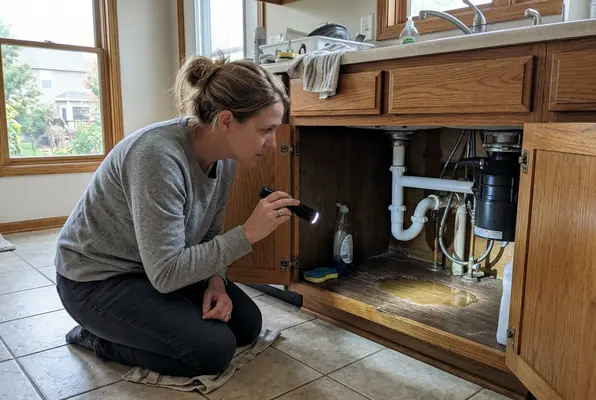
Water Under the Sink in Spring Hill? Find the Leak Before Repair
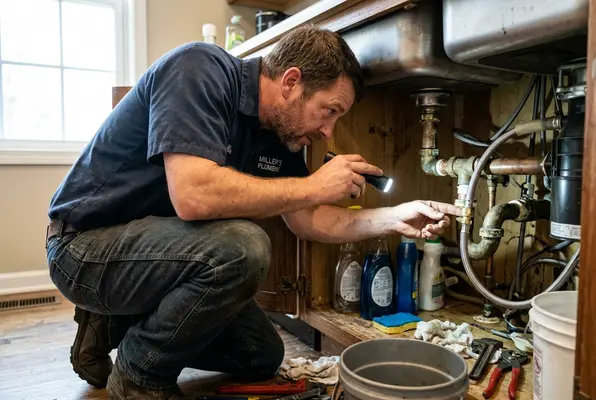
Find Whether the Leak Comes From a Supply Line, Faucet, Drain, or Disposal
Turn off the water and dry everything under the sink. Turn the water back on and watch where drips form first. Supply lines leak at threaded connections or along corroded braided hose. Faucet bases drip when mounting nuts loosen or gaskets fail. P-traps drip at slip joints when washers compress or crack. Garbage disposals leak where they mount to the sink flange or at the drain outlet.
Run water in the sink and let it drain. If drips start only when water flows, the drain assembly or trap is the source. If water appears while the faucet runs but before draining, check the faucet base and supply connections. If the disposal drips when you run it, the leak is at the flange seal or discharge pipe. Each source needs a different repair.
Beemer Plumbing checks every connection point before removing parts. With 36 years of experience, their plumbers trace leaks faster than guessing and replacing pieces one at a time. Knowing the exact source means you pay for the right fix, not trial and error.
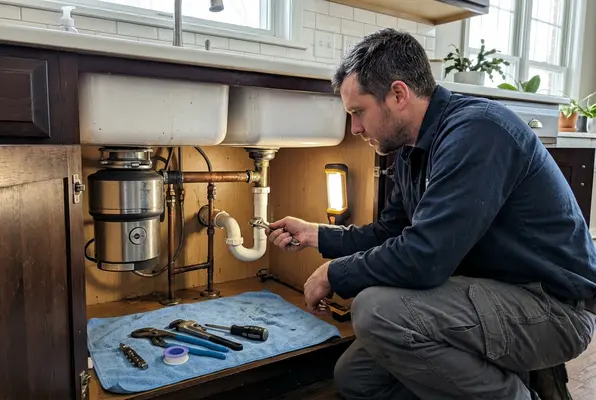
What a Plumber Checks Before Repairing a Leaking Sink
A plumber dries the cabinet, turns the water on, and watches for active drips. They check supply line compression nuts, faucet mounting hardware, trap slip joints, and disposal gaskets. They feel for loose connections, inspect washers for cracks, and look for corrosion on metal fittings. They also check if the sink itself has stress cracks around the drain opening or mounting clips.
Next, they test water flow and drainage. They fill the sink and release it to see if the trap holds pressure. They run the disposal and watch the discharge connection. If a fitting leaks only under pressure, tightening may stop it. If a washer is brittle or a hose shows rust, replacement prevents the next failure.
Beemer Plumbing evaluates every component before deciding on a repair. Their plumbers explain what's worn, what can be tightened, and what needs replacing. You get a clear answer instead of a temporary patch that leaks again in a month.
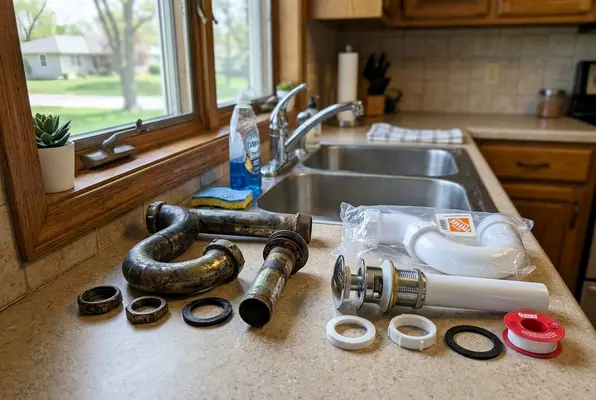
When a Small Repair Is Enough and When Replacement Makes Sense
A small repair works when one fitting is loose, one washer is worn, or one supply line cracked. Tightening a compression nut, swapping a rubber gasket, or replacing a braided hose stops most under-sink leaks. If the faucet, drain assembly, and trap are otherwise solid, you don't need new parts beyond the failed piece.
Replacement makes sense when multiple connections leak, metal parts show corrosion, or the sink itself has cracks. If the faucet base is pitted, the drain flange is rusted, and the trap threads are stripped, patching one spot leaves the rest ready to fail. Replacing the assembly or the sink prevents repeat service calls and water damage.
Beemer Plumbing tells you which option fits your situation. Their plumbers don't upsell replacements when a washer fixes the problem, and they don't patch systems that'll leak again next month. You get the repair that stops the drip and lasts, based on what they find under your sink in Spring Hill.
For urgent leaks or emergency plumbing services, Beemer Plumbing responds quickly to prevent cabinet damage and mold growth. Their plumbing services cover every type of under-sink repair, from simple tightening to full drain replacement.
Frequently Asked Questions
What should I do first when I find water under the sink?
Turn off the water supply under the sink or at the main shutoff, dry the cabinet, and look for the wettest spot to identify the leak source.
Is the leak from the faucet, P-trap, supply line, or disposal?
Turn the water on and watch where drips start: supply lines leak at connections, faucets at the base, P-traps at slip joints, and disposals at the flange or discharge pipe.
Can a leaking sink be repaired without replacing it?
Yes, if the leak comes from a loose fitting, worn washer, or cracked supply line, replacing the failed part usually stops the drip without replacing the entire sink or faucet.
When is an under-sink leak urgent?
A leak is urgent when water flows steadily, soaks the cabinet floor, or drips onto electrical outlets, because it can cause structural damage and mold growth quickly.
What affects the cost of sink leak repair?
The leak source, parts needed, and labor time affect cost; tightening a nut costs less than replacing a corroded drain assembly or garbage disposal flange.