
Sewer Camera Inspection Spring Hill KS
A slow drain or a damp spot in the yard is hard to ignore. You can't see the pipe, so you can't tell if it's a small fix or a big problem. Worrying about a hidden break and a huge bill is fair.
A sewer camera inspection replaces guessing with a clear look inside the line. At Beemer Plumbing, Jeremiah Beem, our Master Plumber and owner, treats the camera as a diagnostic tool. He doesn't just look for a clog. He reads the pipe material, joint separation, bellies (low spots where water can pool) and root patterns to see what's really going on.
The inspection is the first step in our broader Drain, Sewer & Sump Pump Services work. What the footage shows points to the next step. That step may be cleaning, a spot repair, replacement or no work at all.
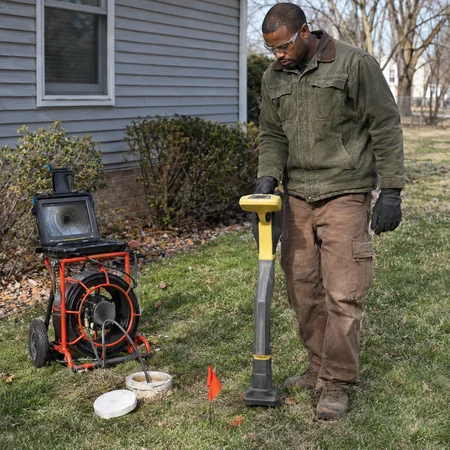
What We Check During a Sewer Camera Inspection Spring Hill KS
A sewer camera isn't just a clog finder. When Jeremiah runs the camera, he reads what the footage shows about the pipe itself. That includes the pipe material, joint separation, bellies and root intrusion patterns. A belly is a low spot where water and waste can settle. A separated joint is a seam that has pulled apart. Either one can look like a simple clog on a quick pass. Reading the footage tells them apart.
Two tools help us know what we're looking at. A sewer camera locator and line tracing show where the camera sits along the line. That means a finding on screen can be matched to a spot in your yard. Knowing where a problem sits helps us plan the next step before any digging starts.
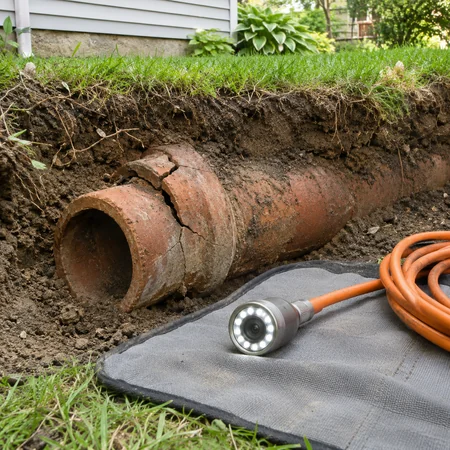
Pipe type matters too. Cast iron pipe can corrode and flake from the inside over time. Clay tile pipe is made in short sections, so its joints can shift apart and let roots in. Each material tends to fail in its own way, so we read the footage with that in mind.
For an inspection-only visit, the goal is simple. We identify the condition of the accessible pipe and explain what we found and what we couldn't see. Access, pipe size, bends and obstructions can limit how far the camera sees, and we'll tell you plainly when that happens.
What we find can change the repair plan before any digging starts.
When to Call for a Sewer Camera Inspection Spring Hill KS
Not knowing is the hardest part. A drip, a wet spot or a drain that won't clear can mean a small fix or a very expensive one. An inspection gives you the answer so you can stop guessing.
These signs can point to a problem in the line:
Slow drains in more than one fixture
Backups that keep coming back
Soggy or sinking spots in the yard
Gurgling sounds from drains or toilets
A sewer smell indoors or outside
None of these proves the pipe is damaged. A slow drain can come from a simple clog. The camera shows which one you're dealing with. If you worry every time it rains, an inspection can end that. Instead of wondering what's underground, you get a picture of the line.
Timing matters too. A buyer or seller can get facts about the line before money moves. A homeowner can confirm the problem before choosing a repair, so no one pays for work the pipe doesn't need.
If the footage shows a bigger issue, we plan the camera findings and any dig under one team. Nothing gets handed off to a separate crew.
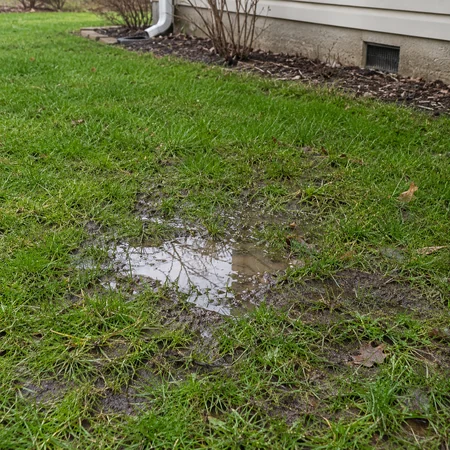
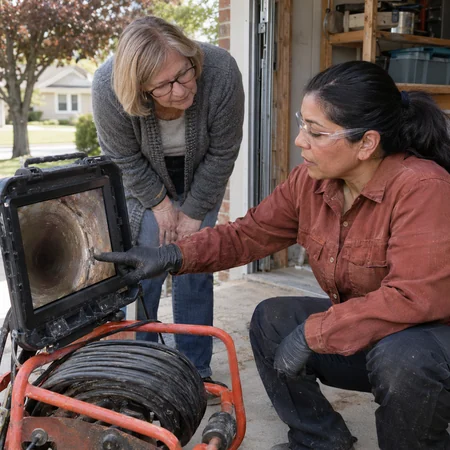
What Can Go Wrong Without a Sewer Camera Inspection in Spring Hill KS
Let's answer the big question first. Are we going to find ten more problems just to pad the bill? No. An inspection should show what is actually in the pipe, nothing more.
That's why you see the footage. You review it with the Beemer team, and you see the pipe's condition before you agree to any repair. Each finding is something you can look at yourself, not something you're asked to take on faith.
Skipping the inspection can carry its own risk. A cracked or separated pipe left alone can let roots and soil in over time. That can lead to blockages that keep coming back. Every case is different, but a small problem can grow while it stays out of sight.
Many owners wait because they can't see the problem. That's understandable. Still, a small fix can cost less when it's found early. We don't quote prices here because every line is different, but the footage gives you facts to plan around.
Repeated cleaning without a camera can also hide a failing line. A drain may clear for a while and then slow down again. Without a look inside, it's hard to know if the pipe is just dirty or if something is wrong with it.
Cleaning, Spot Repair or Replacement After Your Sewer Camera Inspection Spring Hill KS
Many homeowners worry that an inspection will end with "you need a full replacement" when a cleaning would have done the job. The footage helps prevent that. It shows how much of the line is affected and what kind of damage is there, so the next step matches the pipe.
Here's how the findings usually point:
Buildup or blockage in an otherwise serviceable pipe may point to cleaning.
Localized damage may point to a spot repair.
Extensive failure may point to replacement.
A clear and sound line may need no work at all.
Cleaning may come first when debris blocks a useful view of the pipe. We choose the method for the pipe's condition, so jetting is never an automatic first step. We offer hydro jetting and root removal as cleaning options. Cleaning may also follow an inspection when the footage shows a sound line with buildup.
If replacement is on the table, trenchless isn't always cheaper or faster. Jeremiah evaluates soil conditions, pipe age and damage type before he recommends trenchless over open trench work.
A torn-up yard is a fair concern. Any dig that follows is held to a standard of backfill compaction, so the trench settles evenly. And because we own our excavation equipment, Jeremiah can adjust the dig plan if the pipe's condition differs from what the camera showed.
Scheduling, Preparation and Service Area for Sewer Camera Inspection in Spring Hill KS
How long a visit takes depends on a few things. Access to the line, how long the line is, any blockages and any cleaning needed can all change the length of the visit. We don't give a fixed time because every line is different.
A little preparation helps the visit go smoothly:
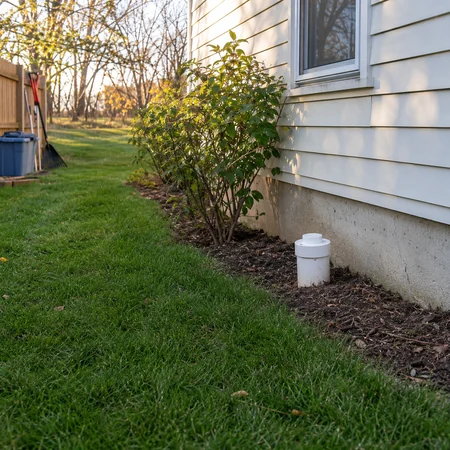
Keep clear access to the cleanout
Move nearby items out of the way
Tell us when and where the symptoms started
If you have records of past repairs on the line, share those too. It's a helpful tip, not a requirement. The more we know about the line's history, the easier it is to read what the camera shows.
During the visit, you see the footage and review it with the team. We walk through what's on the screen so you know what we found.
Spring Hill sits in both Johnson and Miami counties, and our service coverage includes both. That tells you we're available on your side of the line. It doesn't change whether your pipe can be inspected. Access, pipe size, condition and obstructions decide that.
If permits come up for a later repair, the property's address, municipal boundaries and the proposed work decide the process. Inside Spring Hill, the city's requirements apply.
Sewer Camera Inspection Spring Hill KS: Your Line vs the City Main
When a drain backs up, one of the first questions is whose pipe it is. Here's the plain answer. Spring Hill's Sewer Rules and Regulations, Section 13-214, assign maintenance of the building sewer to the property owner. That runs from the public sewer connection to your building. The city maintains the public collection system.
A camera inspection can help locate a defect in your home's connecting line. That's the part of the pipe that belongs to you. It doesn't diagnose the public system, and we won't suggest it does. If you suspect the problem is in the public main, contact Spring Hill Utilities.
We think you should hear this straight, before anyone talks about repairs. Knowing what is and isn't your pipe helps you decide what to do next and who to call.
Beemer Plumbing is based right here in Spring Hill. A nearby crew can often reach jobs without a long drive from a distant metro office.
Our Full Drain, Sewer & Sump Pump Services Spring Hill KS Services
A camera inspection is the first step in our broader Drain, Sewer & Sump Pump Services work. It shows what's going on in the line, and that points to the next step. Depending on what the footage shows, you may need one of these:
Hydro jetting: a cleaning method that uses pressurized water to clear buildup and roots from the pipe.
Drain cleaning: a way to clear a blocked or slow drain when the pipe is otherwise in good shape.
Sewer line repair and replacement: a spot repair for localized damage or a full replacement when the pipe has failed over a longer stretch.
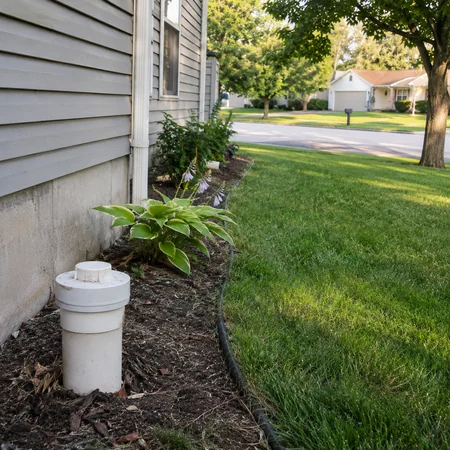
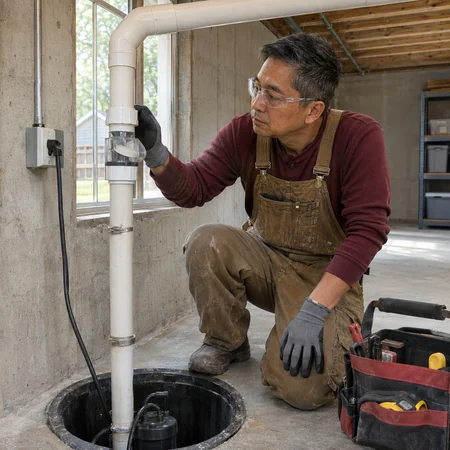
Sump pump discharge line work: work on the line that carries water away from your sump pump.
Beemer Plumbing owns its excavation equipment and runs its own dig crew. One team handles diagnosis, digging, repair and backfill, which reduces the gaps that can happen when work is passed between companies. If the footage shows a bigger issue, the same crew can plan the repair.
Sewer Camera Inspection FAQ
Do slow drains or wet spots in my yard mean I need a sewer camera inspection?
They can. Slow drains and wet spots are common signs that something in the line needs a look. A slow drain can come from a simple clog or from a failing pipe, and the camera helps show which one. The goal is peace of mind, not a sales step. Jeremiah reads pipe material, joints and root patterns, not only blockages.
Could a camera inspection lead to ten more problems just to pad the bill?
It shouldn't. The inspection should show what is actually in the pipe. You see the footage and review it with the Beemer team, so you see the condition before you agree to any repair. Findings should separate what affects the line now from what can wait.
How does a camera inspection help decide between a cleaning, a spot repair and a full replacement?
The footage shows how much of the line is damaged and what kind of damage it is. Buildup may point to cleaning, local damage to a spot repair and extensive failure to replacement. A sound line may need no work. If replacement is considered, Jeremiah evaluates soil, pipe age and damage type before recommending trenchless over open trench work.
What can happen if a cracked or separated sewer pipe goes uninspected?
The problem can get worse over time. Roots and soil can enter the pipe, and blockages can repeat. In some cases, finding a defect early may allow a smaller repair than waiting.
How long does a sewer camera inspection take and how should I prepare?
It depends on access, line length, blockages and any cleaning needed, so we don't give a fixed time. To prepare, keep the cleanout clear, move nearby items out of the way and tell us when and where symptoms started. Obstructions or access issues can change the visit.
What do I get afterward and can I see the footage?
Yes, you see the footage, and we review it with you. We tie each finding to a possible next step so you can decide without pressure.

Call or contact Beemer Plumbing, LLC now for a free estimate and quick, reliable service.
Easing your mind one pipe at a time.
Monday - Friday: Available 24 hours
Saturday & Sunday: Available 24 hours


Powered By Local Biz Domination