Underground Water & Sewer Line Services in Spring Hill KS
If you've got a wet spot in your yard or a slow drain that won't quit, you're probably worried about what's happening underground. You can't see the pipe, so you don't know how bad it really is. That's the hardest part of any water or sewer problem. We're here to change that.
Jeremiah Beem owns his own dig equipment. That means one crew handles the diagnosis and the digging, start to finish. There's no handoff to a stranger sub crew halfway through your job. The same people who find the problem are the ones who fix it.
Spring Hill homes sit on a mix of old wells and newer city water lines. This split means old pipe and new pipe often meet on the same street. Your neighbor might be on a well while you're tied into the city system. That mix makes local know-how matter more than it does in most towns.
National chains send whoever is on call that day, and they quote from a script. They don't know which Spring Hill streets still run old clay sewer pipe. We do, because we work here every day.
See our full service area:
Underground Water & Sewer Line Repair Spring Hill KS
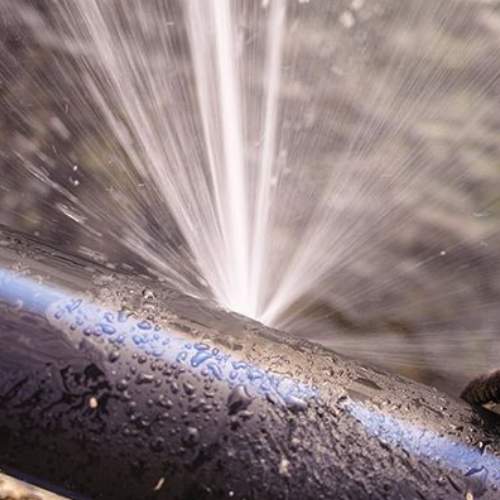
A lot of homeowners think a camera check just finds a clog. That's not the whole story. A real inspection reads pipe material, joint separation and root damage before anyone touches a shovel. It tells us what's actually wrong, not just where the water's stuck.
Cast iron and clay tile pipe both show wear in different ways over time. Clay tile tends to crack at the joints where roots push their way in. Cast iron wears from the inside out, so a camera can spot rust buildup before it turns into a full break. We match the repair to the pipe we find, not a one-size-fits-all fix.
We know one small drip can feel like it's about to turn into a huge bill. That fear keeps a lot of folks from calling until it's worse. We won't set a price until we've seen what's really going on down there. You'll know the plan before we ever dig.
Johnson and Miami County clay soil shifts with the seasons here in Spring Hill. That shifting puts extra strain on older pipe joints, especially where the ground moves the most. It's one more reason a slow leak can turn into a bigger repair if it's ignored too long.
Underground Water & Sewer Line Replacement Spring Hill KS
Not every dig crew should handle a full line swap. When a separate sub crew does the digging, it creates a gap between the plumber who found the problem and the person doing the work. That gap can lead to mistakes or delays nobody planned for.
Our crew handles diagnosis, digging and backfill under one roof. There's no waiting on a third party to show up or figure out the plan on their own. If the pipe looks different once we start digging than what the camera showed, we adjust right then. That kind of real-time change isn't possible when two separate companies are involved.
You might worry your yard will get torn up and never look right again. That's a fair worry, since a lot of dig jobs leave a mess behind. We plan the dig and the backfill together from day one, so the compaction and cleanup match the original plan. Your grass and driveway get treated like they matter, because they do.
Kansas freeze and thaw cycles crack shallow pipe runs each winter across Spring Hill. These aren't one long cold stretch, they're repeated swings that shift the soil around buried lines. That's a common reason full lines need replacing instead of just a patch repair.
Trenchless Water & Sewer Line Replacement Spring Hill KS
Trenchless work gets marketed like it's always the cheaper, faster fix. That's not quite true. Soil type, pipe age and damage type all decide if trenchless is the right call for your yard.
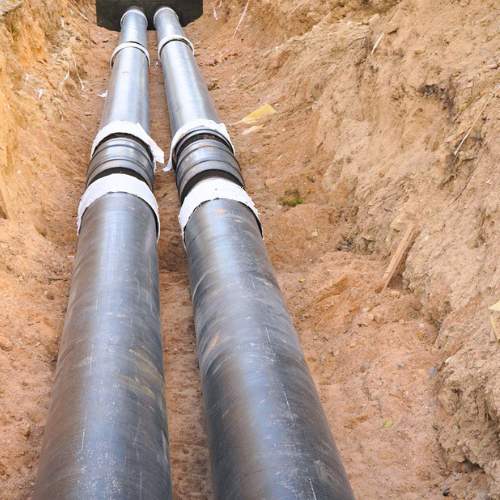
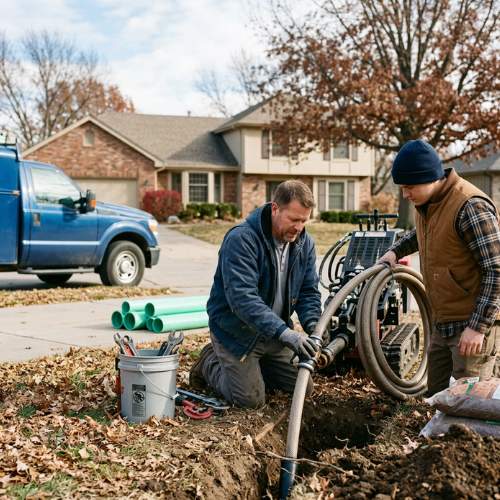
Trenchless pipe bursting can protect your grass, driveway and fences when the job actually fits it. It works by pulling a new pipe through the old one's path, so there's no long open trench. But if the damage is too severe or the soil won't support it, open trench work is still the safer bet.
Timber Creek is an older Spring Hill neighborhood where trenchless work often fits well. Homes there tend to have mature pipe runs in soil conditions that suit this method. If you're in that area and dealing with a slow line, it's worth asking if trenchless makes sense for your yard.
[Full Service Resource Coming Soon]
Plumbing & Sewer Excavation Spring Hill KS
Many companies sub out digging to a third party crew. That splits the diagnosis from the actual repair work, and it's where a lot of jobs go sideways. When the person who found the problem isn't the one digging, details get lost.
We keep it all under one company standard. Our crew digs, repairs and backfills the trench without waiting on an outside sub to become available. That means shorter timelines and fewer surprises once the ground's opened up.
You might worry about a messy yard left behind once the digging's done. We plan the dig, the fix and the cleanup together from the start, so backfill compaction gets done right the first time. A trench that settles evenly means no surface sinking down the road.
The industrial area near Waverly Road and 199th Street is a common excavation zone in Spring Hill. Commercial shops in that zone often need line work tied to older infrastructure. We know the ground out there and what tends to be buried beneath it.
[Full Service Resource Coming Soon]
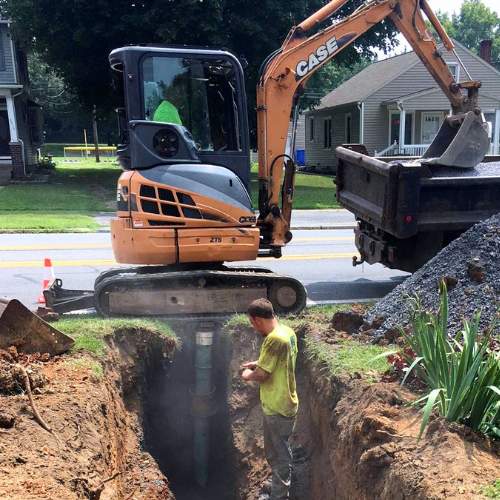
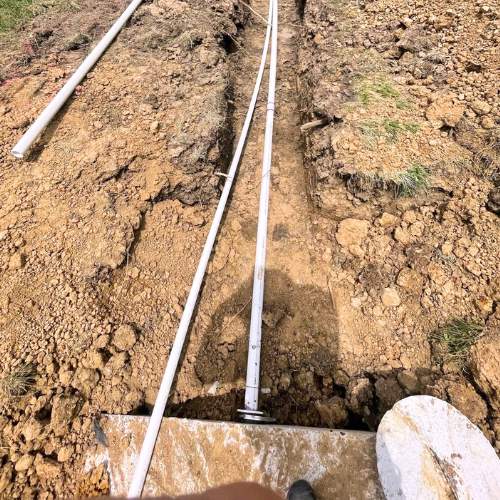
Underground Utility Installation & Repair Spring Hill KS
A general contractor isn't the same as a licensed plumbing crew when it comes to utility lines. Utility work needs its own trained eye, especially where gas and water lines run close together. It's not a job for someone who's just handy with tools.
You might worry that new utility work will disrupt your water service or create a gas safety risk. We test every line before we call the job done, checking for pressure loss and leaks. A backflow prevention device also gets checked to make sure water can't flow the wrong way back into your home.
Spring Hill sits right on the urban-rural water boundary, where private wells and city taps meet on the same block. A job that starts as a simple city tap fix can turn into well pump work once we're on site. We're ready for that mix because we see it here all the time.
[Full Service Resource Coming Soon]
Underground Water & Sewer Line Services FAQ
How do you decide whether an underground water or sewer line should be repaired or replaced?
We inspect the line before recommending either option. The decision depends on the pipe material, age, location, and type of damage. A small damaged section may only need a targeted repair, while widespread cracking, corrosion, joint failure, or repeated leaks may make full replacement the better long-term choice. We explain what we find and provide a repair plan before excavation begins.
Is trenchless replacement available for every underground pipe problem?
No. Trenchless pipe bursting can reduce digging, but it is not suitable for every property or damaged line. We consider the existing pipe's path, soil conditions, pipe material, severity of the damage, and nearby utilities before recommending it. When trenchless work is not a safe or reliable option, a carefully planned open trench replacement may provide a better result.
Will underground pipe excavation destroy my yard or driveway?
Some ground disturbance may be necessary, but we plan the excavation to keep it as controlled as possible. Because our crew handles the diagnosis, digging, repair, and backfill, we can choose the dig area based on the actual pipe location and damage. We also compact the backfill properly to reduce sinking and uneven settling after the ground has been closed.

Call or contact Beemer Plumbing, LLC now for a free estimate and quick, reliable service.
Easing your mind one pipe at a time.
Monday - Friday: Available 24 hours
Saturday & Sunday: Available 24 hours


Powered By Local Biz Domination