
Underground Water & Sewer Line Repair Spring Hill KS
Water pooling in your yard can feel like a mystery. You don't know if it's a small patch job or a full line failure under the ground. That kind of not knowing is the hardest part of the whole thing.
We're Beemer Plumbing, and we run our own dig crew right here in Spring Hill. Our shop sits close to US-169 and K-7, so we don't send a crew driving in from a distant metro office. That means a faster look at your yard and a faster answer.
This repair work is one part of our full Underground Water & Sewer Line Services Spring Hill KS specialty. Below, we'll walk through what a proper repair looks like, what local rules require, and what your soil and weather do to buried pipe over time.
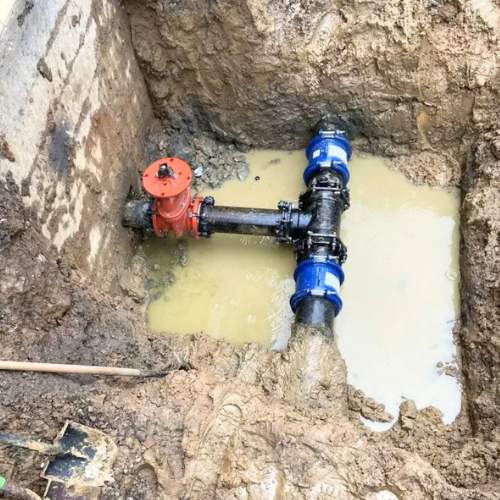
Professional Standards for Underground Water & Sewer Line Repair Spring Hill KS
A sewer camera does more than spot a clog. It reads pipe material, joint separation, bellies, and root growth before we make a digging plan. This step tells us what's really happening under your yard, not just where water backs up.
Every water line repair gets a pressure test before we backfill the trench. The line has to hold with zero leaks before we cover it back up. That's how we know the fix will last, not just look finished.
We own our own excavation equipment, so the same crew that finds the problem also digs and repairs it. Nothing gets lost between two separate companies. Trenchless pipe bursting isn't the right call for every yard, since soil type, pipe age, and damage pattern decide if trenchless or open trench work makes more sense. We call the job done when a final walkthrough shows no active leaks and no pressure loss.
Local Regulations and Permits for Underground Water & Sewer Line Repair Spring Hill KS
Spring Hill sits right on the Johnson-Miami county line. Before any digging starts, we file an 811 locate request through the correct county for your job address. This step keeps the crew clear of buried gas, power, and other utility lines.
An excavation permit is required before we dig under a driveway. That permit process runs through the Contractor Licensing Division inside the Department of Planning, Housing and Community Development. Here in Spring Hill, the city's own Community Development Department at 401 N. Madison St.
handles permits through its E-Permits portal, and it accepts either a Johnson County or a Miami County contractor license.
Kansas doesn't license plumbers at the state level, so licensing depends on which county your job site falls in. Kansas has adopted the International Plumbing Code as its base technical standard for all repair work. You can confirm a real excavation license by asking for the county license number and matching it to your job address.
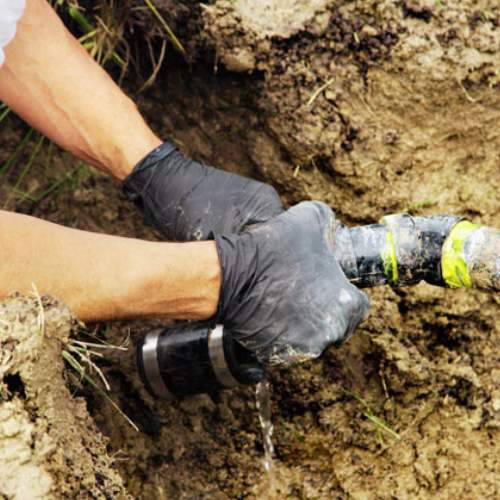
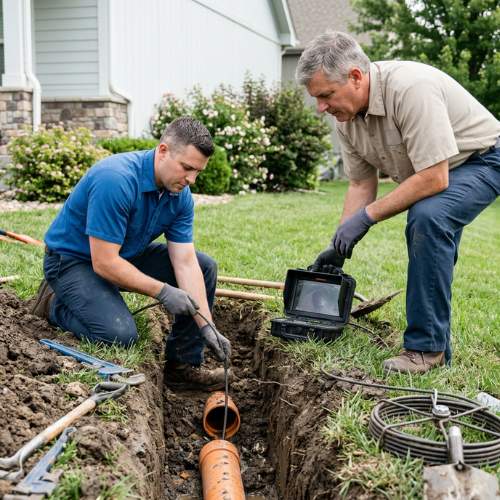
Site Conditions and Performance for Underground Water & Sewer Line Repair Spring Hill KS
Spring Hill sits on a mix of soil types, and that split runs along the county line too. North of the line you'll find Wymore-Ladoga clay, while the south side shifts to a Miami County clay-loam mix. These two soils settle and shift at different rates, so we check which side of the line your job sits on before we quote trench depth or pipe bedding.
Newer subdivisions often sit on rocky fill soil, and that fill can force a deeper trench line to keep the pipe safe from shifting rock. Older parts of town still run on clay soil, and that soil moves with the seasons in a way rockier fill doesn't. Either way, we adjust our dig plan to match what's actually under your yard.
Kansas winters bring freeze and thaw cycles that repeat all season instead of holding one steady cold spell. This back and forth cracks shallow pipe sections faster than a single hard freeze would. Old clay sewer pipe cracks even faster than new PVC, since decades of soil shift and freeze and thaw work against the joints. Once the repair is done, we compact the backfill to a standard that keeps the trench from sinking months later.
When to Call / Warning Signs for Underground Water & Sewer Line Repair Spring Hill KS
A patch job is failing if the same wet spot keeps coming back. Slower drains or a sewage smell that returns after the first fix are also warning signs. These signs mean the repair didn't fully seal the line.
If water still pools in your yard after a repair, that's not just a drainage fluke. It means the line wasn't fully fixed the first time. A sudden drop in water pressure alongside a wet yard spot is another sign the line needs a camera check, not just another patch.
We get it, the fear behind this search is real. A small drip can feel like it might turn into a five figure disaster, and most owners just want to know how bad it really is. That's exactly what a camera check gives you, a real answer instead of a guess.
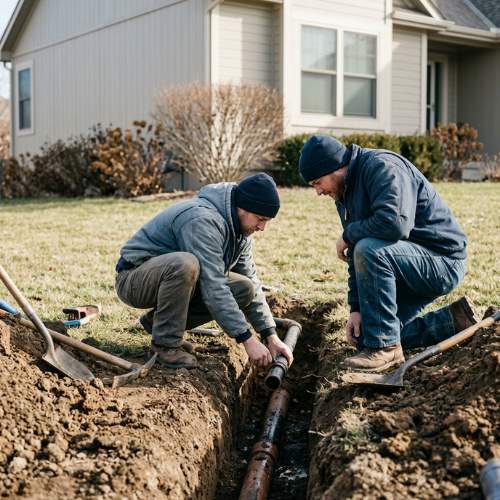
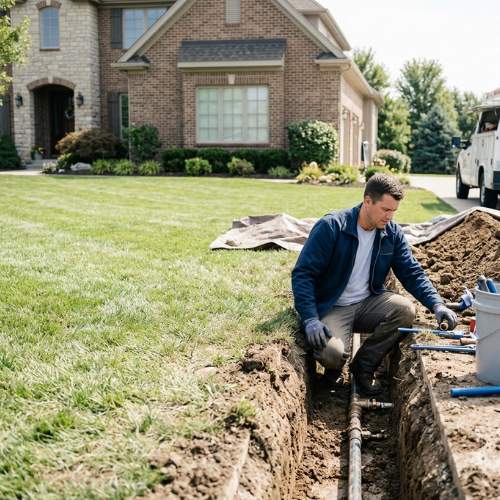
What Fails and What It Costs for Underground Water & Sewer Line Repair Spring Hill KS
The biggest fear in an excavation job usually isn't the pipe itself. It's the yard. Owners worry about torn up grass, a damaged driveway, and a broken fence after the crew leaves.
National franchise crews often quote by a script instead of by what's actually under the ground. They miss which older Spring Hill streets still run on clay sewer pipe, since that crew didn't grow up working this soil. A patched line that fails again ends up costing more than a full trenchless replacement would have cost the first time.
Proper backfill compaction is what keeps a repaired trench from sinking and reopening the same yard damage months later. We plan a tight dig path from the start, so your grass, driveway, and fence line take less of a hit. That's the difference between a repair that holds and one that just delays the same problem.
Our Full Underground Water & Sewer Line Services Spring in Hill KS
This repair service is just one part of a bigger underground water and sewer line specialty. That full specialty covers diagnosis, camera inspection, trenchless work, and full excavation. Each piece works together to solve the whole problem, not just one symptom of it.
Every repair pulls from the same self-performed model. One crew handles diagnosis, digging, and backfill, all under one company standard. That keeps nothing lost between separate contractors and keeps the whole job accountable to one name.
Underground Water & Sewer Line Repair FAQ
What does it mean if water keeps pooling in your yard after a sewer line repair?
It usually means the repair didn't fully seal the line. The pipe may still have a separation point somewhere along the run. A follow up camera check tells us if the fix held or if a new section needs attention.
How much does it cost to fix a yard when an excavation crew tears up the grass and fence?
Yard restoration cost depends on how much grass, driveway, and fence line the trench had to cross. A crew that owns its own equipment can plan a tighter dig path. That tighter path keeps restoration cost lower than a subcontracted crew guessing at the line.
What signs mean a sewer line patch will fail and the line needs a full replacement?
A returning wet spot, a returning sewage smell, or slow drains after a patch all point to a failing repair. These signs mean the original damage was bigger than the patch could cover.
What happens when a cracked sewer line gets patched instead of fixed with trenchless pipe lining?
A patch only covers the crack for a short time. Trenchless lining seals the full pipe section instead. A patched crack usually reopens once soil movement or freeze and thaw cycles hit that same spot again.
Does Spring Hill require an 811 locate request before digging for a water line repair?
Yes, an 811 locate request is required before any digging starts on a water line repair. Since Spring Hill sits across both Johnson and Miami County lines, the locate request has to clear the correct county process for your job address.
Should you rent a sewer camera kit or hire a plumber to check a failing line?
A rented camera kit can show a blockage, but it can't read pipe material, joint separation, or root growth the way a trained eye can. A misread camera result can lead to the wrong repair plan before any digging even starts.

Call or contact Beemer Plumbing, LLC now for a free estimate and quick, reliable service.
Easing your mind one pipe at a time.
Monday - Friday: Available 24 hours
Saturday & Sunday: Available 24 hours


Powered By Local Biz Domination