
Whole House Plumbing Spring Hill KS
You hear a drip or spot a wet patch on the wall and your stomach drops. You don't know if it's a small fix or a five-figure disaster waiting behind the drywall. That fear is exactly why whole house plumbing needs a plan, not a guess.
We run our whole house plumbing jobs out of our Spring Hill home base. That means you get a crew that knows the roads and the neighborhoods, not a truck driving in from across the metro. We show up knowing your soil, your streets and your area's older pipe patterns.
Whole house plumbing and repiping is one of the core jobs we handle every week. It sits inside our full Plumber Spring Hill KS work, alongside drain, sewer, gas and septic service. When you call us for a repipe, you're working with the same team that handles the rest of your home's plumbing too.
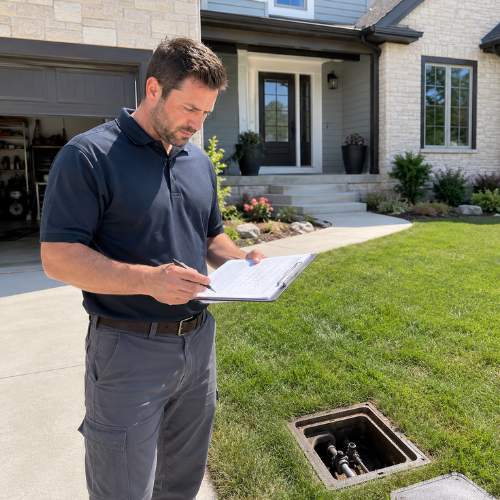
Whole House Plumbing Standards We Follow in Spring Hill KS
A full repipe is not the same job as patching a few bad spots of old galvanized pipe. Patching only fixes the one section that failed today. The rest of the line keeps corroding and narrowing from the inside, so the same problem shows up again soon.
Before any new PEX line goes in, Beemer pressure-tests the main line first. This step catches a weak main before it fails behind a finished wall. At the main shut off valve, we tie in new supply lines one section at a time and test each one before moving to the next. That's different from the standard hardware-store approach, which ties everything in at once and hopes it holds.
Kansas has adopted the International Plumbing Code as its base standard for this kind of work. We treat that code as a floor, not a ceiling, so we don't stop at the bare minimum. Once the fixture and supply line work is done, we run a final walkthrough test for leaks and pressure loss before we call the job finished. That final check is the same success metric the trade holds itself to for whole house work.
Site Conditions That Affect a Whole House Repipe in Spring Hill KS
Spring Hill sits on dense clay soil that shifts as the seasons change and moisture levels move up and down. That shift changes where we can safely route new supply lines under a slab. A line placed the wrong way can end up under stress years down the road, long after the job is done.
Spring Hill also sits on what's called the urban-rural water boundary. Some homes tap into city water, while others still run on a private well. Before we plan a repipe, we check which setup your home has, since a well-fed home often needs an added filtration step first.
Kansas winters bring hard freeze and thaw cycles, not one steady cold stretch. Those cycles can crack shallow pipe runs that aren't set deep enough. That's part of why we route new lines deeper during a repipe, so the freeze and thaw swings don't work against you later.
A crew that doesn't know this clay and well mix is more likely to miscalculate line depth or skip the filtration step altogether. That's why we walk the site and plan the job before any digging starts. Local experience changes the plan, and it's what keeps a repipe from causing new problems down the road.
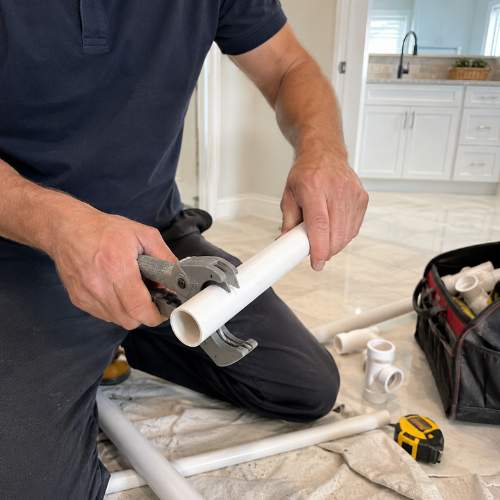
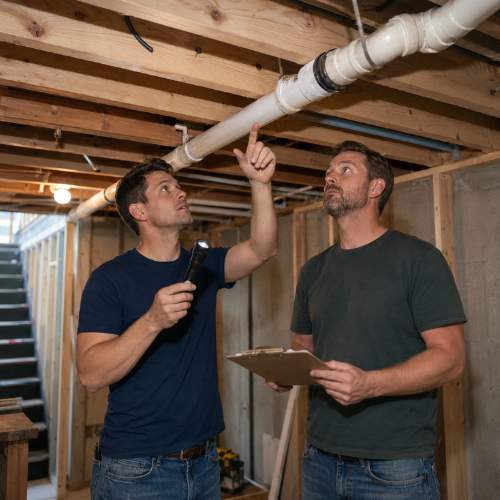
What a Botched Whole House Repipe Costs in Spring Hill KS
A wet spot after a repipe is the exact moment that fear kicks in. You start searching at night, worried it means something much bigger is wrong underground. That fear isn't unreasonable, since a missed leak can point to a real problem in the new work.
National franchise crews that don't know Spring Hill's clay soil or older neighborhoods are more likely to hit an unmarked line mid-job. That's become a known local horror story here. A crew that's never worked this soil or these streets is guessing where problems might be, not planning around them.
A missed slab leak from a rushed repipe often doesn't show up right away. It can surface weeks later as a wet spot on a wall or floor, long after the crew is gone. Once that happens, the repair cost climbs fast, since the slab itself has to be cut open on top of the original pipe fix.
We own our own excavation equipment instead of subbing out the dig work to another company. That means if we hit an unmarked line mid-job, we can react on-site the same day. You're not stuck waiting on a subcontractor's schedule while the problem sits open underground.
Permits and Local Regulations for Whole House Repipes in Spring Hill KS
A whole house repipe in Spring Hill needs a permit through the Spring Hill Community Development Department.
Spring Hill straddles both Johnson County and Miami County, so the permit process isn't as simple as it looks. Before a permit gets approved, the contractor has to hold a license through whichever county program covers that specific job site. That's a detail a lot of homeowners don't know to ask about.
This dual-county rule is different from a single-county city like Olathe or Overland Park. A crew that doesn't work in Spring Hill often can misfile a permit under the wrong county, which slows the whole job down. Kansas doesn't issue plumbing licenses at the state level either, so county-level licensing is the real proof of standing you should ask to see.
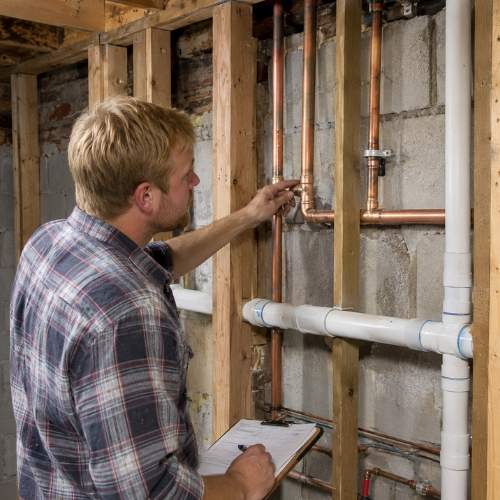

Professional Whole House Repipe vs. a Hardware Store Repipe Kit in Spring Hill KS
Are we actually licensed, or just handy with tools? That's the same doubt that can make a hardware store repipe kit look tempting. It seems like a way to skip the guesswork and save some money.
A repipe kit skips the camera inspection step completely. That means joint separation, bellies and root intrusion in the old line never get checked before new supply lines go in. You end up building new work on top of problems nobody looked for.
A kit also assumes your home has uniform pipe material and a standard depth throughout. That assumption falls apart fast once Spring Hill's clay soil and mixed well or city water setup get factored in. What works on paper doesn't always match what's actually under your home.
A licensed plumber's final pressure test and walkthrough catches problems a kit installer has no way to verify. That final check is the difference between hoping the job holds and knowing it does.
Our Full Plumber Spring Hill KS Services
Whole house plumbing is one piece of a bigger picture. It sits alongside drain, sewer, gas and septic work under one Plumber Spring Hill KS practice. The same crew that repipes your home can also handle a sewer or drain issue found along the way.
Keeping diagnosis, digging and repair under one company avoids a common gap. That gap shows up when a plumbing company subs out excavation to a separate crew, and nobody's fully in charge of the whole job. With us, one team handles it start to finish.
Whole House Plumbing FAQ
What goes wrong when a plumber patches old galvanized pipe instead of doing a full whole house repipe?
Patching galvanized pipe only fixes the one spot that failed. The rest of the old line keeps corroding and narrowing from the inside. We check the full line's material and age with a camera pass before we ever recommend a patch, since a patch on an already-thin line often fails again within a year.
What should a homeowner do if a crew hits an unmarked line during a repipe in an older Spring Hill neighborhood?
Stop work at that spot right away. Have the crew confirm what the line is before any backfill happens. This exact scenario is a known local horror story, since crews unfamiliar with Spring Hill's older neighborhoods are more likely to hit unmarked lines that a locally experienced crew would expect and plan around.
What does a wet spot on the wall mean if it shows up right after a whole house repipe is done?
A wet spot right after a repipe usually points to a joint that wasn't sealed or pressure-tested correctly. This is the exact trigger that makes a homeowner fear a much bigger hidden problem behind the wall.
How much does it cost to fix a slab leak that a rushed whole house repipe missed?
Cost climbs fast once a slab has to be cut open. The fix now includes concrete work on top of the original pipe repair. A final pressure test done before the job is called complete is what catches a slab leak before it turns into a cut-open repair later.
Is a repipe kit from a hardware store a safe swap for hiring a licensed plumber?
No, a repipe kit skips the camera inspection and pressure testing steps that catch hidden problems before they become leaks. A kit also assumes one standard pipe depth, which doesn't account for Spring Hill's clay soil shifting supply lines over time.
What should a homeowner ask a plumber before a whole house repipe to avoid a botched job?
Ask whether the crew pressure-tests the main line first. Ask whether they hold a license through Johnson County or Miami County for this specific job site. Spring Hill sits in both counties, so the correct license answer depends on which county the property falls under, not a single blanket answer.

Call or contact Beemer Plumbing, LLC now for a free estimate and quick, reliable service.
Easing your mind one pipe at a time.
Monday - Friday: Available 24 hours
Saturday & Sunday: Available 24 hours


Powered By Local Biz Domination