
Storm Sewer Repair Spring Hill KS
Soggy stripes in the lawn. A downspout line that backs up. A wet spot that never dries. You can't see what's underground, so it's hard to tell a small fix from a big one.
Storm sewer repair fixes the buried pipes that carry rainwater away from your home, such as downspout lines and yard drain pipes. This page is for homeowners who think a rainwater pipe on their property is clogged, crushed or separated.
At Beemer Plumbing, our crew reads the camera footage, traces the line and does the digging. That keeps diagnosis and digging under one set of eyes.
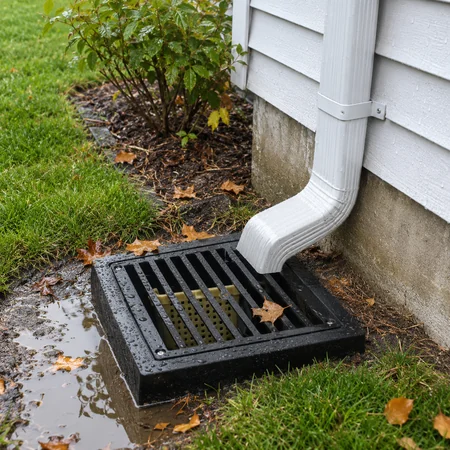
Is It a Storm Pipe, a Downspout Line or Just Your Yard's Slope?
A storm sewer carries rain and surface water. It's a different system from the pipe that carries household waste. Rain water usually flows to a creek or pond without treatment. Household wastewater goes to a treatment plant. Knowing which pipe you're dealing with is the first step.
Yard pooling can come from three places. It can be a failed buried pipe, a clogged or poorly routed downspout line, or ground that slopes the wrong way. Start with the slope. Land should slope away from your foundation. Gutters, downspouts and sump pipes are common sources of wet ground near a house, so check where each one empties.
Pipe problems leave different clues. Wet strips that follow the path of a buried line point underground. So do water backing up out of a downspout and a settled dip over the line.
A camera look separates a pipe defect from a surface problem before anyone digs. That way you know what you're paying for before anyone breaks ground. If your pooling starts where a sump pump drains out, our sump pump page is the better place to begin.
Finding the Exact Damage Before Anyone Digs
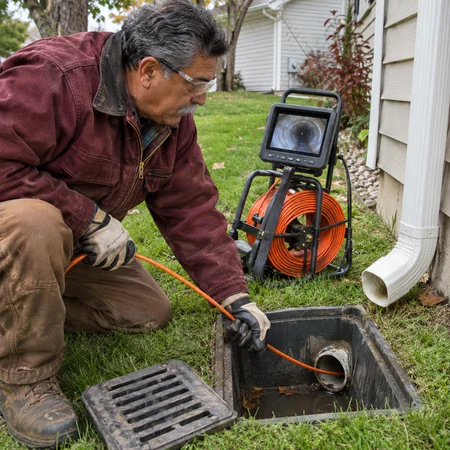
A camera inside the pipe shows what's wrong. A locator shows where it is. Together they tell you more than a wet patch of lawn ever could.
The camera does more than find clogs. A trained eye reads the pipe material, joints that have pulled apart, low spots called bellies where water sits and root growth. What the camera shows can change the repair plan before any digging starts.
Storm pipe isn't all the same. Steel, concrete and plastic are all used, so the material the camera sees helps decide which repair fits. Once a defect shows on screen, a camera locator and line tracing match it to a spot in your yard. That can keep the dig area focused on the damage.
A camera can only see as far as access and obstructions allow. If it can't reach the damage, you should expect to be told where it stopped, why it stopped and what the next step could be. Our sewer camera inspection page explains how the visit works.
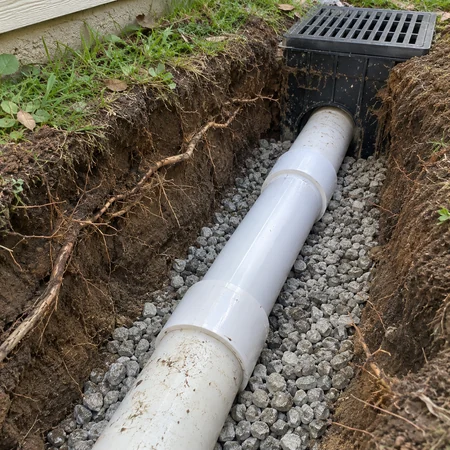
Spot Repair, Trenchless or Open Digging: What Decides It
Pipe condition, pipe material, depth and what sits around the pipe decide the repair method. No single method fits every yard.
Spot repair means digging a small trench, cutting out the bad section and installing a new piece. It fits damage that's limited to one place. Open digging or replacing a longer run fits pipe that's broken in many places or too far gone for other methods. Some pipes can't be fixed any way but digging.
Trenchless pipe bursting is a method we use. It pulls new pipe through the old line. Before we recommend it, we check the soil, the pipe's age and the type of damage. Trenchless isn't always cheaper or faster, and it doesn't fit every yard or pipe. Clay soil and freeze-thaw swings can shift the ground around shallow buried lines, which is one reason soil gets checked first.
You shouldn't have to take a full replacement on faith. The camera footage should show why a bigger repair is needed instead of a smaller one. Relining and sliplining are other methods used across the industry, so ask any contractor which methods they actually offer. If you're weighing the same choice on your household sewer line, these pages cover it.
What Happens to Your Yard, Driveway and Landscaping
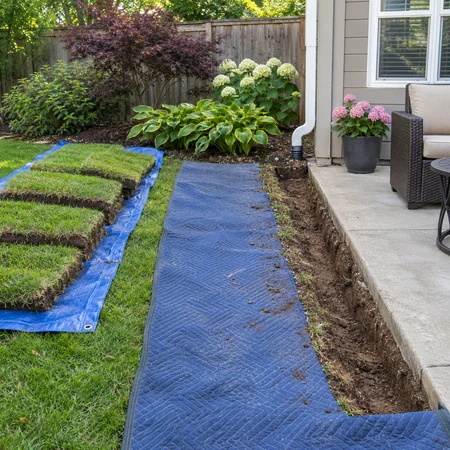
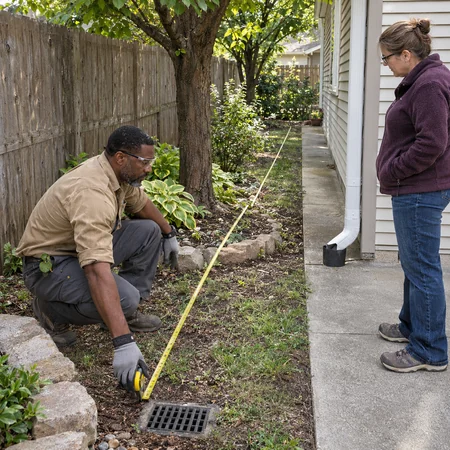
Some digging is unavoidable. How much depends on how deep the pipe is, how long the damaged run is and which repair method fits. If you're worried about your grass, driveway or fence, that's a reasonable thing to ask about up front.
Before work starts, tell us what sits over the pipe. That includes the driveway, fence, trees, patio and sprinkler lines. The more we know about what's above the line, the easier it is to plan the dig around it.
Our crew digs, repairs and backfills under one company standard. The same crew that opens the trench closes it. Backfill is compacted as part of the job.
What gets put back, such as sod, concrete or landscaping, depends on the job. Settle it in the written scope before you approve work. Ask what's included and what isn't.
Some homeowners want a clean site and clear updates. Others want straight talk and a say in the plan. Either way, you should know the plan before the first shovel goes in.
What Drives the Cost of a Storm Sewer Repair
Cost follows three things: how much pipe is damaged, how deep it sits and how hard it is to reach. This page doesn't list prices, because every pipe and yard is different.
Several things move a quote. Pipe condition and material count, and so do depth, nearby utilities or structures and the repair method. What sits on top of the pipe matters too. A driveway, patio, tree or fence can add work, and so can the amount of surface that needs restoring.
A repair done in time usually keeps more options open. Waiting can narrow them.
Ask for a written scope tied to the camera findings. That way the quote matches what the camera actually saw in your pipe.
Our Full Drain, Sewer & Sump Pump Services in Spring Hill KS
Storm sewer repair sits beside the household sewer line and sump pump work we do. It's a separate job from fixing the pipe that carries waste out of your house. Some projects start with a different service. Cleaning or camera work can come first, and a sump pump discharge line has its own page.
If you're not sure which pipe is giving you trouble, the full drain, sewer and sump pump category is the place to sort it out.
Storm Sewer Repair FAQ
How can I tell if a buried drain pipe is clogged or broken?
A clog usually clears when the line is cleaned. A break or collapse keeps the problem coming back at the same spot. Roots, debris and age-related breaks are common causes. Backed-up downspouts, overflowing gutters and a settled yard drain can all point underground. A camera shows which one you have, since it reads joints, pipe material and roots.
Who has to fix a broken storm drain pipe on my property, me or the city?
It depends on who owns the pipe. Spring Hill's right-of-way manual says the city owns and maintains the storm sewer it owns. That covers the city's own pipes. The manual doesn't address a pipe that serves only your home. City code also lets the Public Works Director regulate and inspect privately controlled stormwater systems. This applies when they could affect the city's system.
Ownership can turn on where the pipe sits and on any recorded plat or easement language. Check your plat or call Spring Hill Public Works before you approve work. This page covers pipes on your own property, not the city's pipes.
Is a broken storm drain an emergency, or can it wait?
It depends on where the water goes. Water collecting near the foundation, or showing up in a basement or crawlspace, is the urgent case. A line that only pools water in the lawn, away from the house, is less pressing. Soil can wash into a damaged pipe over time, so don't leave it for long. Note where the water pools and when it happens. That history helps the diagnosis.
How long does a storm sewer repair take, and what can delay the start?
We don't promise a time frame, because it depends on the damage, the dig size and the method. Locates come first. Spring Hill's right-of-way manual calls for contacting Kansas One-Call at least 48 hours before excavation. Digging in the public right-of-way falls under a general right-of-way permit, which can add time. Weather can also push back the start.
For work on your own lot, ask what permits apply and who pulls them before you approve work. We own our excavation equipment, so there's no wait for a rented machine or a separate digging crew. That removes one possible delay but isn't a promise on timing.
How do you check the repair works before and after the trench is closed?
After the repair, we run a camera through the line to confirm it's clear and flowing. Our standard for the filled trench is even settling with no sinking later. Ask what will be inspected before the trench is covered, and get it in the written scope.
Is storm sewer repair a plumber's job or an excavator's job?
It takes both. Someone has to read the pipe, and someone has to dig and repair it. Many plumbing companies hire out the digging. That creates a gap between the person who diagnosed the pipe and the person who digs. Jeremiah Beem, our master plumber and owner, owns the excavation equipment and runs the dig crew himself. The dig plan can change on site if the pipe looks different from the camera footage.

Call or contact Beemer Plumbing, LLC now for a free estimate and quick, reliable service.
Easing your mind one pipe at a time.
Monday - Friday: Available 24 hours
Saturday & Sunday: Available 24 hours


Powered By Local Biz Domination